
Next Meeting: 10th November at 6:30pm to discuss There Are Rivers In The Sky by Elif Shafak.
Flesh, published in 2025, is the sixth novel by Canadian-Hungarian David Szalay and winner ofthe 2025 Booker Prize. The book opens with the protagonist, István, as a shy and awkward adolescent living on a Hungarian housing estate. The story follows his rise from poverty to married life amongst Europe’s top-one-percent earners and economic descent afterwards. His life takes many turns in between. István is a virginal 15-year-old when he has a sexual relationship with a married 42-year-old woman. He gets into a fight with her husband and is blamed for his death, leading to juvenile detention and soldiering during the Iraq War. From these experiences he learns resilience.
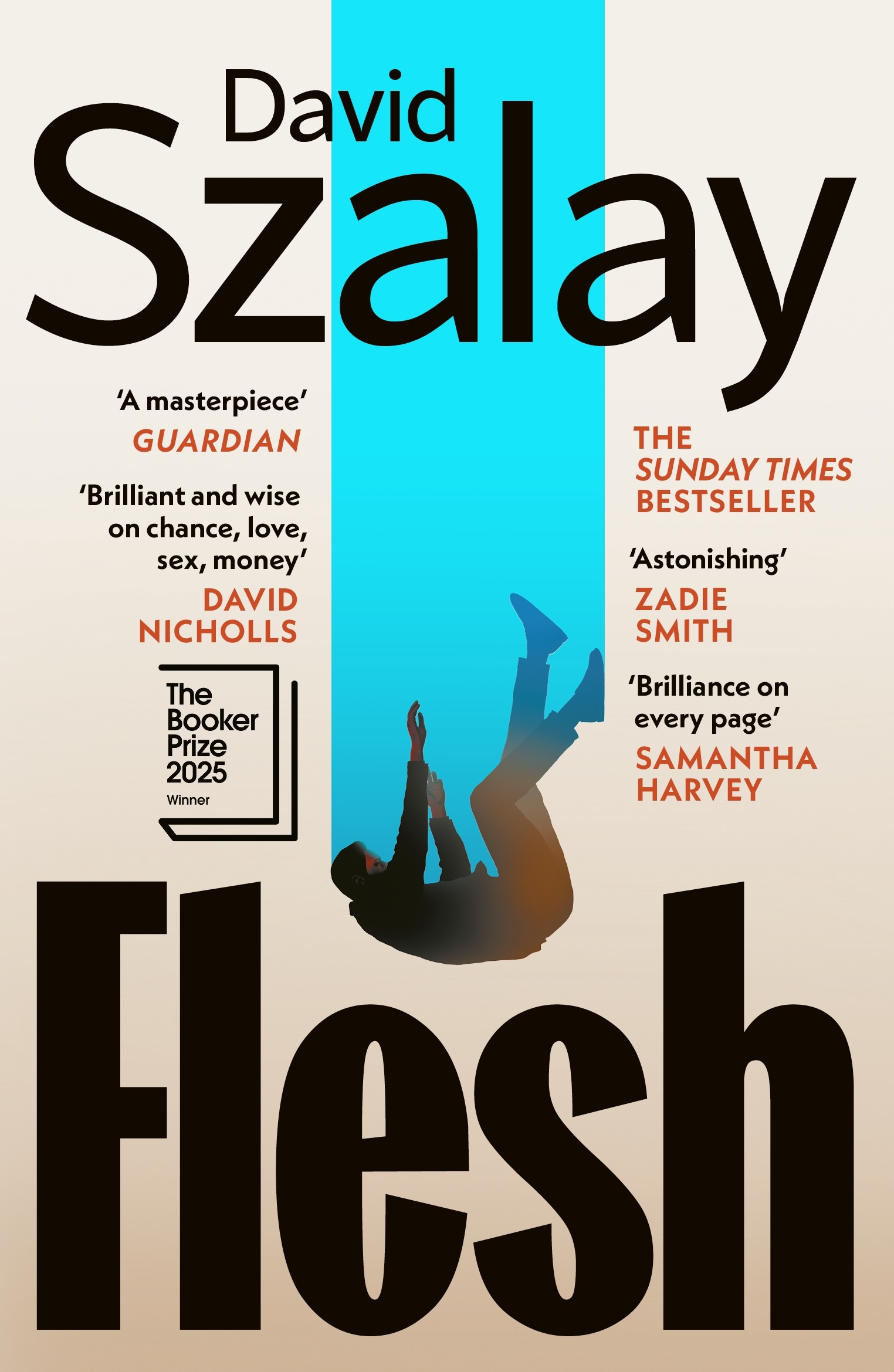
Later, István works in private security and becomes a chauffeur for a well-to-do London family.He becomes part of their life, including their moneyed lifestyle, designer clothes, private jets, and exclusive restaurants. He has an affair with the wife, during which the husband dies of natural causes. István marries the widow. His stepson despises him.
István usually acts on instinct first and reflects on his actions later. István’s inclination to follow his instincts rather than thinking things through is reflected in his speech patterns. He tends to reply to other people rather than initiating conversation, and he heavily uses banal phrases such as ‘yeah’, ‘I don’t know’ or ‘Okay’.
Most of our group readers were at a loss to understand how Flesh won the 2025 Booker Prize but it provided interesting and lively discussion. Some found the book very disturbing citing the main character as emotionally detached, having no morality, no sense of what is appropriate or acceptable, and with his maturity stunted at adolescent level. A couple of readers suggested that this was as a result of the trauma he experienced through his teenage sexual abuse, incarceration and participation in the war, thus being an insinuation of PTSD. The writing itself was spare, flat and unreflective, mirroring István’s characteristics and the interactions between characters. This led some readers to be unengaged and without sympathy for any of the characters, although the relationship between István and his stepson, Thomas probably presented the most nuanced insight of the book.
Ratings: Hetta 4, Dianne 3.5, Margie and Sandy 3, Nicola and Lynda 2.5, Lesley, Jenny and Di 2, Viv 1
We look forward to seeing you again at our next meeting at 6.30pm, Tuesday 10th of November
to discuss There Are Rivers In The Sky by Elif Shafak.
About Us
We are a group that gets together once a month to discuss good books. Each of us gets to choose a book on a rotational basis, preferably one outside our personal comfort zone – we try to keep the trash to ourselves. After the discussion, we comment on other books we read that month. Most of the time we remain friends after the meeting.
We normally meet at Room 2.1 of the Robina Community Centre’s Boadroom. This building is located opposite the Auditorium entrance of the Robina Library on the second Tuesday of every month from 6:30 p.m. to 8:30 p.m.
 A small contribution is required towards the rent of the room, but not if you are a first timer. The amount depends on the number of people attending.
One book title is chosen each month and we all read that book. There is a ‘host’ who introduces and co-ordinates the discussion. The role of host is rotated around the group so that each member has the opportunity to nominate their book (it could also be an author, theme or genre). The host also acts as chairperson for that meeting.
Although we are not a social club (we are readers), we occasionally attend literary events, relevant movies or plays here at the Gold Coast, Brisbane or Byron Bay. We conform to basic meeting practices, and everyone has an equal opportunity to express their opinion. Everyone’s interpretation is valid, as long as it’s expressed respectfully.
We welcome any new members who share our aims and are happy to contribute to our group. Newcomers are not required to have read the book to attend the first meeting and no contribution is required from them at the first meeting attended.
Feel free to have a look at our Book List and Newsletters in the sidebar. If you are reading this blog in a mobile device find the menu at the bottom of the page.
CONTACT DETAILS
For more information use the contact form.


